
Megan Thee Stallion didn't wake up one morning twerking on a Coachella stage. The most-imitated hips in pop music are the end of a fifteen-year apprenticeship that started with a stolen TV remote in Houston and ran through a college campus, a viral TikTok, a Grammy-winning choreographer, and her own workout brand. If you only know her from the music videos, you've been watching the last 5% of the work. Here's the full timeline — and the five things any beginner can actually learn from how she got there.
Stage 1 — The BET: Uncut years (childhood self-teaching)
In a 2020 interview honoring BET's 40th anniversary, Megan publicly credited the late-night video block BET: Uncut as her first twerk teacher. She was around eighth grade, wasn't supposed to be watching it, and would sneak it on to copy what the dancers were doing. This is the part of the story everyone skips: before she had a choreographer, before she had a stage, she had a TV and a closed bedroom door — exactly the setup most adult students start with today.
Almost every great twerk dancer I've trained started the same way: alone, in a small room, copying someone off a screen. There is no shame in that — it is the technique's actual entry point.
Stage 2 — Houston, the city that does the work for you
Megan grew up in Houston with a mother who rapped under the name Holly-Wood. Houston in the 2000s and 2010s was a Southern hip-hop capital where chopped-and-screwed beats, Third Coast bass, and a dance culture descended from New Orleans bounce were just part of regular life. She wasn't "learning twerk" in a class — she was absorbing the rhythmic vocabulary of the South the way a kid in São Paulo absorbs samba. That cultural immersion is the layer most non-Southern students never get, and it's why her timing reads as effortless on camera.
If you're learning twerk outside of a city with this dance tradition, you have to build the rhythmic foundation deliberately instead of by osmosis. That's largely what the free first lesson on the home guide is engineered to do — it gives you the bounce timing a Houston kid would just inherit.
Stage 3 — Prairie View A&M (the laboratory)
Before the record deal, Megan was a Health Administration student at Prairie View A&M, a historically Black university in Texas. She and her best friend Kelsey Nicole filmed twerk videos around campus — clips that started going viral on Instagram and (in her own retelling) eventually got the two of them in trouble with the administration. This is the stage most aspiring dancers underrate: she was practicing in public, on camera, with a peer, and getting honest feedback from an audience long before she had a manager.
Stage 4 — Going pro: JaQuel Knight enters the picture
At the end of 2019 Megan started working with choreographer and creative director JaQuel Knight — the same person who built the choreography for Beyoncé's "Single Ladies" at nineteen, and who has since worked on her videos for "Body," "WAP" with Cardi B, and her 2025 Coachella headline set. In interviews around the 2020 AMAs performance of "Body," Knight described his job in the early days as teaching her stage etiquette — how to count an 8, how to hit a mark, how to recover from a missed beat — on top of the twerk vocabulary she already had.
That's the distinction worth pausing on. Megan came in with the dance. What she had to learn from Knight was the stagecraft around it — placement, transitions, hitting the camera at the right beat. Two separate skills, almost always confused.
Stage 5 — The Savage Challenge (when TikTok learned from her)
By March 2020, the situation flipped. Choreographer Keara "Keke" Wilson built the now-iconic "Savage" challenge — and Megan herself had to learn the routine off TikTok with her best friend's help to perform it back to her own audience. It's a small detail with a big lesson: even at the top, professionals learn other people's choreography. Being a great dancer doesn't mean you generate every move; it means you can quickly absorb someone else's and make it look like yours.
Stage 6 — Hottie Bootcamp (the body that holds the dance)
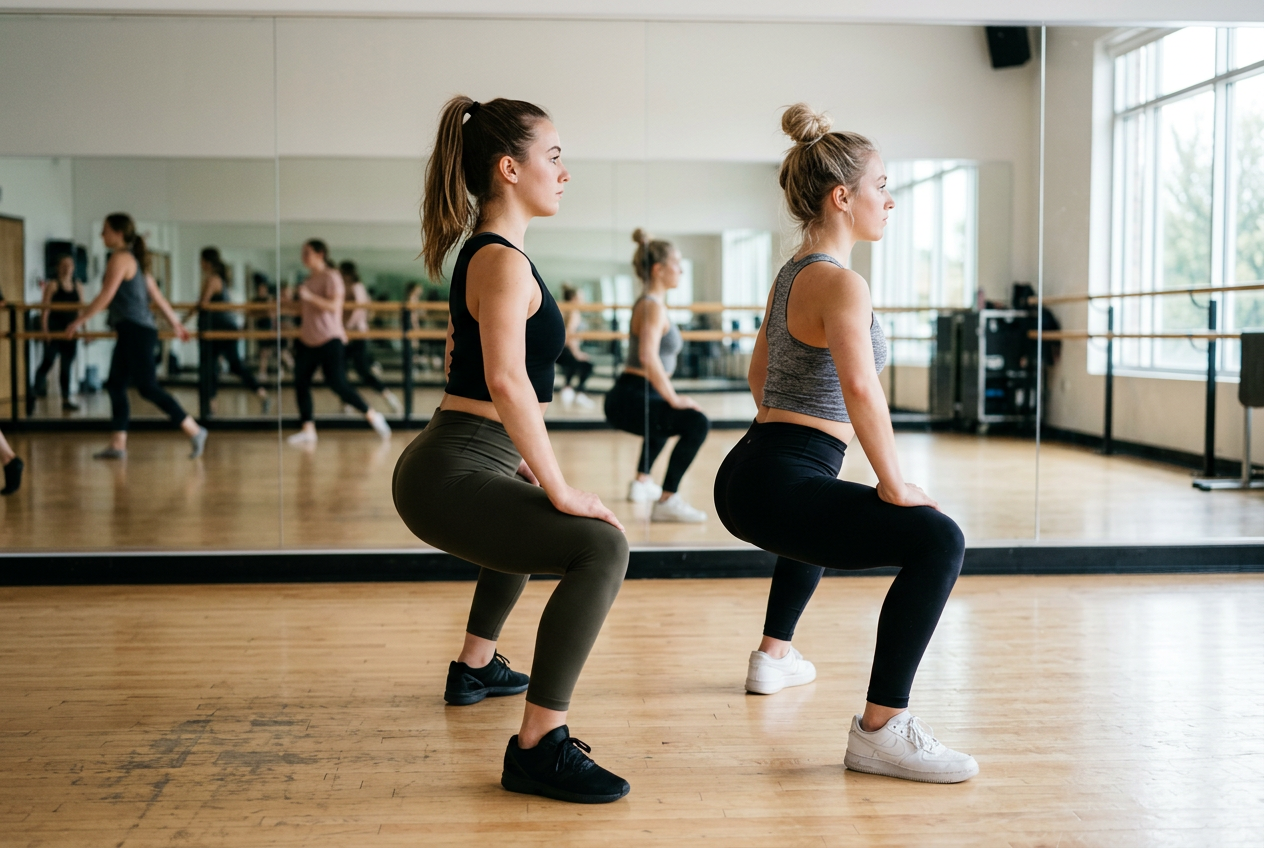
From 2021 onward Megan started publishing her own "Hottie Bootcamp" workout series — initially with trainer Jasmyn Benjamin, later in full-length episodes on her own YouTube and TikTok. The format isn't styled as dance training, but the contents are: lower-body strength, glute isolation, hip mobility, conditioning. In 2024 she relaunched it specifically as a twerk-workout infomercial. The pattern is clear — by the time twerk became her full-time job, she was treating her lower body the way a runner treats their cardio.
What changed between the bedroom and the stage
Bedroom-era Megan
- Self-taught from BET: Uncut clips
- One mirror, no feedback loop
- Rhythm absorbed passively from Houston
- Stamina = whatever the song lasted
- Zero conditioning plan
Coachella-era Megan
- Choreographed by JaQuel Knight
- Peer + creative director feedback
- Rhythm structured into 8-counts and marks
- Stamina = full-set, high-tempo, on heels
- Year-round Hottie Bootcamp protocol
Five lessons any beginner can actually steal
- Start in private. The bedroom-with-the-door-closed phase isn't beneath you — it's where the Stallion herself started.
- Pick one reference dancer and copy her on loop. Don't watch ten people doing the move; watch one person ten times.
- Get a single practice partner and a phone camera. The Prairie View loop — film, watch back, fix one thing — beats solo practice by a wide margin.
- Separate stage from steps. Once your basic bounce holds, learn timing and placement (counts, marks, the camera angle) as a different skill — that's the JaQuel Knight layer.
- Train the engine. Glutes, hamstrings, calves, and hip mobility are what let you bounce for a full song without the knees giving out. Megan literally built a workout brand around this; do the smaller version of it.
Where to actually start
If this timeline made anything clear, it's that the foundation matters more than the finale. Megan's Coachella set works because her basic bounce — the eighth-grade-in-front-of-the-TV version — is rock solid. Start with the free first lesson and you'll be building on the same layer she did, in the order she did it.

